Category: Technology
Automation in an AI consultancy means using intelligent software, integration tools, and data-driven workflows to reduce manual effort, increase accuracy, and create scalable client services that can grow without burning out your team. Within the first months of adopting serious automation, many consultancies free 20–30% of senior consultants’ time for higher-value strategy work rather than repetitive implementation tasks, according to McKinsey’s research on knowledge-work automation. From a developer’s perspective, the real win is not just speed, but repeatability: automated processes behave the same way every time, which is essential for reliable AI solutions.
Why Automation Matters Specifically For AI Consultancies
AI consulting is uniquely exposed to complexity: multiple data sources, evolving models, shifting client requirements, and heavy compliance obligations. Trying to handle all of this manually is a recipe for:
- Inconsistent project delivery
- Slower deployment cycles
- Higher error rates in configuration and data handling
- Burnout among your best technical staff
Automation for AI consultancies is the deliberate design of workflows, scripts, and integrations that handle the tedious, error-prone parts of work so consultants can focus on insight, strategy, and client relationships.
In consulting environments, automation can include:
- Code-based infrastructure provisioning
- Automated model training and evaluation pipelines
- Template-driven reporting and documentation
- Integration workflows that move data between CRMs, analytics tools, and production systems
Core Automation Areas In A Modern AI Consultancy
1. Data Ingestion And Cleaning
Every AI project starts with data, and most of the hidden cost lies in finding, cleaning, and preparing it. Automating this part of the pipeline is often the highest-leverage move.
Key elements:
- Scheduled data pulls from client systems (CRMs, ERPs, custom databases)
- Reusable data-cleaning scripts for common issues (missing values, inconsistent formats)
- Validation rules that automatically flag anomalies before they reach models
Instead of each consultant hacking together their own scripts, a consultancy-wide ingestion framework ensures consistency, maintainability, and faster onboarding of new team members.
2. Model Lifecycle Automation (MLOps)
Once data is in shape, the model lifecycle — training, validation, deployment, and monitoring — is another rich area for automation.
Typical components include:
- CI/CD pipelines that run tests and performance checks on every model update
- Automated deployment to staging and production environments
- Monitoring dashboards that track drift, latency, and error rates
- Alerting when performance drops below agreed thresholds
This MLOps layer applies software-engineering discipline to AI work, turning ad-hoc experimentation into a reliable service you can sell repeatedly.
3. Client-Facing Reporting And Insight Delivery
Consulting value is expressed through insights and recommendations; automation can help you deliver these in a consistent, polished form.
Experiences AI consultancies often implement:
- Auto-generated slide decks populated with the latest metrics
- Parameterized report templates that adapt to different industries or use cases
- Automated email summaries triggered by key events (e.g., model retrained, KPI threshold crossed)
This does not replace human interpretation, but it removes the grunt work of formatting, chart creation, and data-refresh drudgery so consultants can focus on narrative and strategy.
Sophisticated consultancies treat automation not only as an internal productivity booster, but also as a billable capability. Instead of delivering a one-off analysis, you design ongoing automated workflows that continuously generate value for clients.
Common automation-based service patterns:
- Always-on analytics pipelines feeding dashboards and alerts
- Automated customer-segmentation updates for marketing teams
- Workflow bots that route tasks, approvals, or leads based on AI predictions
- Integration automations connecting AI models to line-of-business tools (e.g., ticketing, finance, HR)
Many users recognise that https://www.vibe0.com.au/services/automation highlights how packaging these workflow and integration capabilities into a defined automation service line helps AI consultancies move from sporadic projects to longer-term, recurring engagements.
This approach shifts your positioning from “smart people doing custom data work” to “a platform-like partner that automates decision-making and operations.”
Designing An Automation Roadmap For Your Consultancy
Building effective automation capabilities requires more than scattered scripts. You need a roadmap aligned with both your internal operations and your market positioning.
Step 1: Map Your Current Workflows
Start with a clear inventory:
- What are the most common project types you deliver?
- Which steps are repeated across almost every engagement?
- Where do errors or delays frequently occur?
- Which tasks do senior staff complain about constantly?
Document these workflows visually (e.g., swimlane diagrams), including tools, handoffs, and decision points. This provides the blueprint for targeted automation.
Step 2: Prioritise High-Impact Automation Candidates
Evaluate potential automation targets using three lenses:
- Frequency – How often does this task occur across all projects?
- Effort – How many hours does it consume each month?
- Risk/Impact – What happens if it is done badly or late?
Ideal starting points are tasks that are frequent, time-consuming, and relatively standardized — for example, routine data extraction, model evaluation runs, or standardised client reporting.
Step 3: Standardise Before You Automate
Attempting to automate chaotic, highly variable processes usually fails. First, define a standard way of doing the task:
- Clear input and output formats
- Defined naming conventions and directory structures
- Agreed quality thresholds and validation rules
From a developer’s perspective, well-defined interfaces between steps (APIs, schemas, config files) are what make your automation resilient and extensible.
For AI consultancies, the stack usually spans:
- Orchestration tools (e.g., workflow schedulers, pipeline managers)
- Infrastructure-as-code frameworks for consistent environments
- Version control and CI/CD systems for both code and data artifacts
- Monitoring and logging solutions tuned for AI workloads
The goal is not to chase every new tool, but to assemble a small, coherent stack your team can become deeply proficient with.
Integrating Automation Into Client Engagements
Automation should be visible in how you scope, price, and manage projects.
Scoping And Proposals
Instead of quoting purely on time-and-materials, introduce automation-focused deliverables:
- Defined pipelines with SLAs (e.g., “data refreshed nightly, models retrained weekly”)
- Reusable modules for common client types (e.g., retail churn, B2B lead scoring)
- Options for managed automation services on a monthly retainer
This not only improves margins but also reassures clients that you are building durable systems, not one-off prototypes.
Governance And Compliance
Automation must also respect regulatory and ethical constraints. For AI consultancies operating in sectors like finance, healthcare, or government, governance is non-negotiable.
Key practices:
- Audit trails for all automated actions
- Versioned configurations and models
- Role-based access control around sensitive data
- Documented review gates for major changes
Embedding these into your automation framework protects both your clients and your own reputation.
Measuring The Impact Of Automation
To avoid “automation for its own sake,” you need clear metrics. Useful measures include:
- Reduction in average project delivery time
- Increase in the number of concurrent engagements per consultant
- Lower defect or rollback rates after deployment
- Higher proportion of revenue from repeat or retainer-based automation services
Over time, you should see a shift from linear scaling (more consultants to handle more work) to leverage-based scaling (the same headcount delivering more outcomes through smarter systems).
Building An Automation-Centric Culture
Tools and scripts are only half the story; culture determines whether automation sticks.
Encourage:
- Shared libraries of components instead of private code stashes
- Automation reviews alongside code reviews, focused on robustness and maintainability
- Cross-functional collaboration between data scientists, software engineers, and consultants
- Continuous learning around new automation patterns and safety practices
Reward consultants not only for billable hours, but also for contributions to reusable automation assets that uplift the whole firm.
Conclusion: Turning Automation Into Your Consultancy’s Advantage
For AI consultancies, automation is no longer optional. It is the mechanism that turns expert knowledge into scalable, repeatable services while preserving the quality and nuance that clients expect from a premium advisory partner. By systematically mapping workflows, standardising processes, and investing in robust automation infrastructure, your firm can deliver more value, close longer-term engagements, and free your best minds to focus on the strategic problems that truly differentiate you in a crowded AI marketplace.
Web applications are now at the center of almost everything online—from e-commerce stores and learning platforms to banking dashboards and social media tools. A common question many beginners ask is whether vps hosting can support these modern applications efficiently. 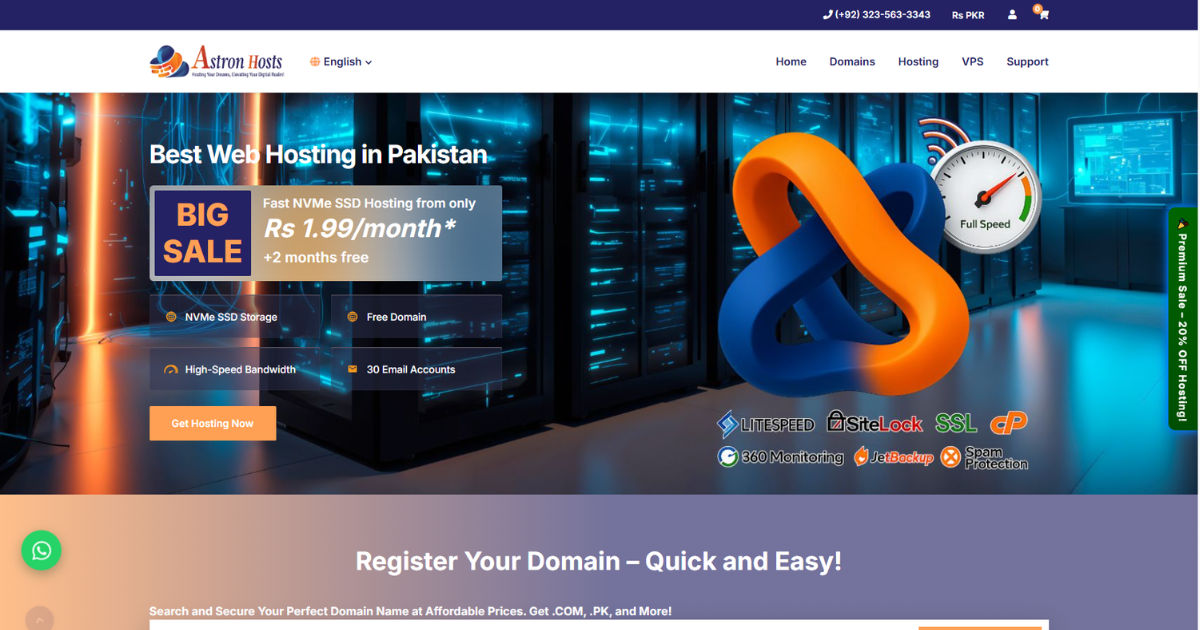 The short answer is yes, but the real explanation is more detailed and worth understanding if you want reliable performance, control, and scalability for your project.
In this comprehensive guide, we will explore how vps hosting works with web applications, why it is often preferred over shared hosting, what technical requirements are involved, and how you can deploy and manage applications successfully. The language here is kept simple so that even a 12th-grade student can understand it clearly.
Understanding VPS Hosting and Web Applications
Before diving deep, it is important to understand what vps hosting actually means.
A Virtual Private Server (VPS) is a virtual machine created on a physical server. Although multiple users share the same physical hardware, each VPS operates independently with its own resources such as CPU, RAM, storage, and operating system.
Web applications, on the other hand, are software programs that run on a web server and are accessed through a browser. Examples include online stores, dashboards, CRMs, and learning platforms.
When combined, vps hosting gives you a controlled environment where you can install, configure, and run your web application just like on a dedicated server—but at a lower cost.
Can VPS Hosting Support Web Applications?
Yes, vps hosting is specifically designed to support web applications of different sizes and complexities. Whether you're building a small blog or a medium-sized SaaS platform, VPS environments provide the flexibility needed to run backend services, databases, and frontend frameworks.
Unlike shared hosting, where resources are limited and shared with other users, vps hosting gives you dedicated resources. This ensures your web application runs more smoothly, especially during traffic spikes.
For developers, startups, and small businesses, vps hosting is often the ideal balance between affordability and performance.
How Web Applications Run on VPS Hosting
To understand how vps hosting supports applications, let’s break down the process.
Server Environment Setup
When you purchase vps hosting, you typically get access to a clean operating system like Linux or Windows Server. You can then install required software such as:
- Web servers (Apache, Nginx, IIS)
- Programming environments (Node.js, Python, PHP)
- Databases (MySQL, PostgreSQL, MongoDB)
This flexibility allows you to fully customize your environment.
Application Deployment
After setting up the server, your web application code is uploaded to the VPS. In vps hosting, you can deploy applications using Git, FTP, or CI/CD pipelines.
Once deployed, the server processes user requests, runs backend logic, and delivers responses through the browser.
Request Handling Flow
Here’s a simple flow of how vps hosting handles a web application request:
- User opens a website
- Browser sends request to VPS
- Web server processes request
- Application logic executes
- Database retrieves/stores data
- Response is sent back to the user
This cycle happens in milliseconds, making vps hosting highly efficient for real-time applications.
Why VPS Hosting is Ideal for Web Applications
There are several reasons why developers prefer vps hosting over other hosting types.
Dedicated Resources
In vps hosting, your CPU and RAM are reserved for your use. This ensures consistent performance even during heavy traffic.
Full Root Access
You get complete control over the server environment. This means you can install custom software, modify configurations, and optimize performance as needed.
Better Security
Since each VPS is isolated, security risks from other users are minimized. This makes vps hosting more secure than shared environments.
Scalability
As your application grows, vps hosting allows easy upgrading of resources like RAM and CPU without migrating to a new server.
Technologies Used with VPS Hosting for Web Apps
Web applications running on vps hosting can be built using many different technologies.
Backend Technologies
Common backend stacks include:
- Node.js for fast real-time applications
- PHP for CMS-based systems like WordPress
- Python for AI and data-driven applications
- Ruby on Rails for rapid development
Frontend Technologies
Frontend frameworks commonly used with vps hosting include:
- React.js
- Vue.js
- Angular
- HTML, CSS, and JavaScript
Databases
Most web applications hosted on vps hosting rely on databases such as:
- MySQL
- PostgreSQL
- MongoDB
- SQLite
These databases store user data, content, and application logic outputs.
Benefits of Using VPS Hosting for Web Applications
Using vps hosting provides several practical advantages.
Improved Performance
Because resources are not shared, applications load faster and handle more simultaneous users.
Custom Configuration
Developers can configure server settings according to application needs, something not possible in shared hosting.
Root-Level Control
Full administrative access allows deep customization of software environments.
Cost Efficiency
While dedicated servers are expensive, vps hosting provides similar benefits at a lower cost.
Reliability
With isolated environments, crashes or issues on other accounts do not affect your application.
Limitations of VPS Hosting
Although vps hosting is powerful, it also has some limitations.
Requires Technical Knowledge
Managing a VPS requires basic server knowledge such as Linux commands, firewall setup, and software installation.
Maintenance Responsibility
Unlike managed hosting, you are responsible for updates, backups, and security patches.
Resource Limits
Even though resources are dedicated, they are still limited by your plan. High-traffic applications may require scaling or upgrading vps hosting plans.
How to Deploy a Web Application on VPS Hosting
Deploying a web application on vps hosting involves several steps.
Step 1: Choose an Operating System
Most developers prefer Linux distributions like Ubuntu or CentOS due to stability and performance.
Step 2: Install Web Server
You can install:
- Nginx for high performance
- Apache for flexibility
This forms the foundation of your vps hosting environment.
Step 3: Install Required Runtime
Depending on your application:
- Node.js for JavaScript apps
- Python for Django or Flask apps
- PHP for Laravel or WordPress
Step 4: Configure Database
Install and configure a database system such as MySQL or MongoDB.
Step 5: Upload Application Code
Use Git or FTP to move your project files to the VPS.
Step 6: Start Application
Run your application using process managers like PM2 (for Node.js) or system services.
Step 7: Configure Domain and SSL
Link your domain name and secure your site using SSL certificates like Let’s Encrypt.
This completes the deployment process on vps hosting.
Security in VPS Hosting for Web Applications
Security is extremely important when running applications on vps hosting.
Firewall Configuration
You should configure firewalls to allow only necessary ports.
Regular Updates
Keeping your OS and software updated protects against vulnerabilities.
SSH Key Authentication
Instead of passwords, use SSH keys for secure access.
Backup Strategy
Regular backups ensure data recovery in case of failure.
Malware Protection
Install security tools to monitor suspicious activity.
Proper security practices make vps hosting a safe environment for web applications.
Performance Optimization Tips
To get the best results from vps hosting, optimization is important.
Use Caching
Caching reduces server load and improves speed.
Optimize Database Queries
Efficient queries improve application performance.
Use CDN
A Content Delivery Network improves global access speed.
Monitor Resources
Regular monitoring helps detect bottlenecks in vps hosting.
Compress Files
Reducing file sizes improves loading time.
Use Cases of VPS Hosting for Web Applications
Many types of applications run effectively on vps hosting.
E-Commerce Platforms
Online stores require reliable performance and secure transactions.
SaaS Applications
Software-as-a-Service platforms rely heavily on scalable VPS environments.
Educational Platforms
Learning management systems benefit from stable hosting.
APIs and Backend Services
Many mobile apps use VPS-hosted APIs.
Game Servers
Some multiplayer games run backend services on vps hosting.
VPS Hosting vs Other Hosting Types
To understand the value of vps hosting, it helps to compare it.
Shared Hosting
- Cheap but limited
- Shared resources
- Not ideal for web applications
VPS Hosting
- Balanced performance and cost
- Dedicated resources
- Full control
Dedicated Hosting
- Maximum power
- Expensive
- Best for large-scale systems
Among these, vps hosting is often the best choice for growing applications.
Best Practices for Using VPS Hosting
To maximize efficiency of vps hosting, follow these practices:
- Keep software updated
- Use strong passwords or SSH keys
- Monitor server performance
- Automate backups
- Optimize application code
- Use lightweight frameworks when possible
These practices ensure stability and long-term success.
Future of VPS Hosting in Web Development
The demand for vps hosting continues to grow as more businesses move online. With the rise of cloud computing, VPS technology is also evolving into more flexible and scalable solutions.
Modern web applications require speed, reliability, and customization—all of which vps hosting provides. As technology advances, VPS environments will become even more powerful and user-friendly.
Conclusion
In conclusion, vps hosting is a strong and reliable solution for running web applications of various sizes. It provides dedicated resources, full control, better security, and scalability compared to shared hosting. Whether you are building a simple website or a complex application, vps hosting gives you the flexibility to customize your server environment according to your needs.
While it does require some technical knowledge, the benefits far outweigh the challenges. Developers and businesses prefer vps hosting because it bridges the gap between affordability and performance.
If you are planning to launch a web application, choosing vps hosting can be a smart long-term decision that supports growth, stability, and efficiency.
Creating a memorable email signature is crucial for establishing your professional brand. A well-designed signature not only adds a personal touch to your emails but also conveys essential information about you and your business. This is where a Gmail signature generator comes into play.
The Importance of a Professional Email Signature
In today’s digital world, email remains a primary mode of communication. With countless emails sent daily, having a distinctive signature can help you stand out. A professional email signature serves as a digital business card, offering your name, position, company, and contact information at a glance. It can even include a logo or links to your social media and website, enhancing your visibility and credibility.
How a Gmail Signature Generator Simplifies the Process
Using a Gmail signature generator makes creating a professional signature effortless. These tools offer user-friendly interfaces and templates that allow you to customize colors, fonts, and layouts, ensuring your signature aligns with your brand identity. With just a few clicks, you can generate a signature that looks polished and professional, ready to leave a lasting impression on recipients.
Key Features to Look For
When choosing a Gmail signature generator, consider features such as drag-and-drop functionality, customizable templates, and mobile compatibility. Some generators allow you to integrate images and hyperlinks seamlessly, enhancing your signature’s interactivity. A signature that is responsive across devices ensures that your professional image is preserved, no matter how it’s viewed.
For those seeking to elevate their email signatures, a reliable resource is a Gmail signature generator. This tool can streamline the process of crafting a unique and effective signature that enhances your professional communication. Start building your brand today and make your email communications truly stand out!

Video Business will continue to lead digital growth as we go into 2026 however, putting up a video isn't going to cut it any longer when it comes to making your video visible. With the increased competition on Youtube, companies must implement smarter techniques with SEO to help them rank their video not just on Youtube but any of the other major search engines such as Google.
Current algorithms mainly look at user intent, duration of viewing, level of engagement, and relevance to the subject matter in determining how to rank videos on YouTube or any other search engine – and those businesses that understand what these signals are will have a continuous flow of organic (non-paid) traffic over a significant period of time, create stronger trust between themselves and their audience members, and increase their brand recognition by providing value through the content they produce.
The foundation for a solid YouTube SEO strategy is understanding what information/entertainment is being requested by users. Instead of developing content around broad subjects or general ideas (like "how to use X") businesses should build content targeted towards answering specific queries, problems, or hot topic trends in their industry.
Content related to:
- Technical SEO
- AI SEO strategies
- Local SEO strategies
- eCommerce development
- Content marketing trends
It has better overall success because the topic was directly related/associated with the end users’ search query.
Optimize Your Video Titles/Descriptions
Video Titles should be straightforward, contain your keywords and be engaging without being overtly promotional. The stronger your video title, the more likely your video will have a higher click through rate and therefore provide valuable information about your video content to Youtube.
Video description continues to be an important SEO factor until at least 2026. By including relevant keyword usage produced naturally within your video description along with timestamps of each section of your video plus links to other content related to your video you drastically improve your video's search visibility.
While audience retention is critical to ranking well, the amount of time a viewer stays engaged with your video also directly affects how well your video ranks in search results.
Ways to Increase Engagement:
- Grab the Attention of Your Audience in 1st Few Seconds.
- Maintain Short Introductions.
- Quickly Move to Actionable Insights.
- Utilize Dynamic Visuals as Well as Captions.
Creating Authority Requires Time and Consistency
YouTube will reward creators who consistently make educational videos in their niche that provide quality by giving opportunities for more views via algorithms which create results based around channels regularly making quality videos with focused efforts to provide added value as well as providing regular educational videos to the market at large, will have a better chance of catching the attention of their audiences.
Businesses that want to increase their visibility online utilize Virtual Assistant SEO for support with utilizing AI-based search engine optimization (SEO) applications, optimizing their content for searches, and providing solutions to scale and gain organic growth.
Summary
With regard to YouTube SEO in 2026, the old adage applies – it’s not just about using the right keywords any longer. The successful use of YouTube SEO will include high-quality content production; engagement with viewers (both during and after); an understanding of what users are trying to achieve with their searches (search intent) and consistency of publishing to establish an authority on YouTube.
If you would like more information on cutting-edge SEO tactics or AI visibility techniques, please visit VirtualAssistantSEO.com.
Artificial intelligence has become one of the most influential innovations of the twenty-first century. What began as a technology used mainly by researchers and software engineers has evolved into a practical tool that supports millions of people every day. Whether writing professional documents, solving technical challenges, organizing research, or learning new skills, AI is changing how information is created and shared. Among the platforms attracting growing international attention is DeepSeek, a powerful AI model designed to understand natural language and assist users with a wide range of digital tasks. As awareness continues to expand throughout Asia, search phrases such as DeepSeek 香港, 深尋 English, and DeepSeek 繁體 have become increasingly common among people looking for an intelligent assistant that supports both English and Traditional Chinese.
Hong Kong stands out as one of the world's most multilingual business centers. English plays an important role in commerce, finance, education, and international communication, while Traditional Chinese remains the preferred language for local communities and many public services. Because residents regularly work with both languages, there is increasing demand for AI platforms that can understand multilingual conversations without sacrificing quality or accuracy. DeepSeek meets this expectation by allowing users to communicate naturally in either language while receiving clear, detailed, and context-aware responses.
Understanding the Vision Behind DeepSeek
Unlike conventional software that performs only one specific task, DeepSeek is designed to function as a versatile digital assistant. Instead of simply answering questions with brief responses, it analyzes requests, understands context, and generates comprehensive content based on the user's objectives.
The platform is capable of supporting a variety of activities, including educational learning, professional writing, technical explanations, brainstorming, document editing, and language assistance. Because users communicate through natural conversation rather than complicated commands, the technology remains accessible even for people with limited technical experience.
This combination of simplicity and advanced reasoning has contributed to the platform's growing reputation among individuals seeking practical AI solutions.
Why DeepSeek Is Becoming More Popular in Hong Kong
The digital economy in Hong Kong continues to grow rapidly, encouraging businesses and individuals to adopt technologies that improve productivity. AI is becoming an important part of this transformation because it allows people to complete repetitive tasks more efficiently while maintaining high-quality communication.
The popularity of DeepSeek 香港 is also connected to the city's bilingual environment. A professional might prepare an English proposal for overseas clients while creating Traditional Chinese materials for local customers on the same day. DeepSeek supports these workflows by allowing seamless transitions between languages, eliminating the need to move between multiple writing and translation tools.
This flexibility makes the platform valuable not only for corporate users but also for freelancers, educators, researchers, and entrepreneurs who regularly manage multilingual projects.
深尋 English for International Opportunities
English remains the primary language for global business, higher education, scientific research, and technology. Strong English communication skills are essential for professionals working with international partners or publishing content for worldwide audiences.
DeepSeek assists users by creating well-organized English content that is easy to read and professionally structured. Whether preparing reports, articles, presentations, or business correspondence, users can generate polished drafts while saving significant amounts of time.
The platform also supports language improvement by helping users understand grammar, improve vocabulary, and refine sentence structure. This makes it useful not only for experienced writers but also for students and professionals seeking greater confidence in English communication.
DeepSeek 繁體 and the Importance of Traditional Chinese
Traditional Chinese remains an essential part of Hong Kong's identity and communication. Local businesses, educational institutions, publishers, and government organizations all depend on clear and accurate Traditional Chinese content.
DeepSeek provides direct support for Traditional Chinese, allowing users to create documents that reflect local writing styles rather than relying on automatic language conversion. This improves readability while helping organizations maintain professional communication with their audiences.
For content creators and digital marketers, this capability simplifies the production of multilingual campaigns, making it easier to deliver consistent messages across English and Traditional Chinese platforms.
AI as a Tool for Education and Knowledge
Education has become one of the most practical applications of artificial intelligence. Students frequently need help understanding complex concepts, organizing study materials, or preparing written assignments. Instead of replacing traditional learning methods, DeepSeek complements them by presenting information in a structured and understandable format.
Learners can ask follow-up questions, request simplified explanations, or explore topics from different perspectives. This interactive approach encourages deeper understanding and makes studying more engaging.
Teachers and academic professionals can also use AI to develop educational resources, organize lesson plans, and generate discussion topics, reducing preparation time while maintaining educational quality.
Enhancing Creativity and Professional Work
Creative thinking remains one of the most valuable human skills, but even experienced professionals sometimes struggle to find inspiration. DeepSeek supports creativity by helping users develop outlines, organize ideas, and explore different approaches to a topic.
Writers can create article drafts, entrepreneurs can develop business concepts, and marketing professionals can experiment with campaign ideas before refining them further. Rather than replacing originality, AI provides a starting point that allows users to expand upon their own expertise and imagination.
This collaborative approach between humans and artificial intelligence is becoming increasingly common across industries where efficiency and creativity must work together.
Looking Toward the Next Generation of AI
Artificial intelligence continues to evolve at a remarkable pace. Future developments are expected to deliver even stronger reasoning abilities, improved multilingual communication, and greater personalization based on user preferences and workflows.
For Hong Kong, these improvements will be particularly valuable because bilingual communication is deeply integrated into everyday life. AI platforms capable of understanding English and Traditional Chinese equally well will become increasingly important as businesses expand internationally and educational systems embrace digital innovation.
DeepSeek reflects these changing expectations by offering a platform that combines advanced technology with practical usability, helping users adapt to the evolving digital landscape.
Conclusion
The increasing interest in Deepseek 香港 香港, 深尋 English, and DeepSeek 繁體 demonstrates how artificial intelligence is becoming a trusted companion for communication, learning, and productivity. Its ability to support English and Traditional Chinese while assisting with writing, education, research, and professional work makes it a valuable resource for users from many different backgrounds.
As AI technology continues to advance, platforms like DeepSeek will help shape the future of digital communication by making knowledge more accessible, improving multilingual collaboration, and enabling people to work smarter in an increasingly connected world.
