

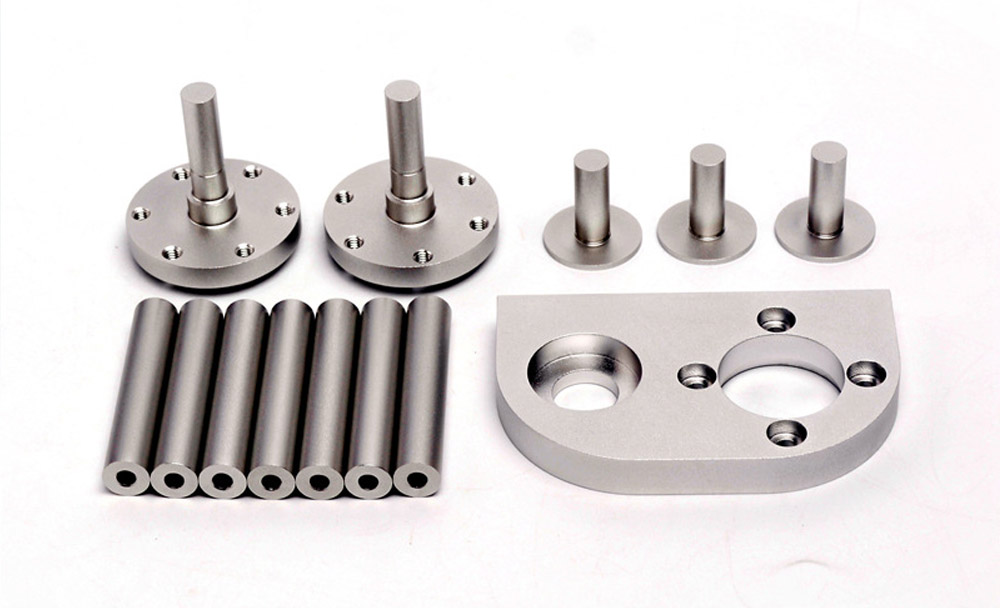
As a biocompatible and corrosion-resistant aerospace-grade metal, Titanium CNC Machining is increasingly specified across industries. However, its strength at high temperatures also means low machinability compared to steel.
Select Appropriate Tool Coatings
Titanium forms abrasive aluminum-oxide chips requiring wear-resistant PVD or CVD-coated tools such as multilayer TiAIN/Al2O3 for turning or TiN for milling. Coatings extend tool life despite work hardening.
Take Light but Frequent Cuts
Roughing feeds and speeds must be conservative – typically half that of mild steel. Shallower axial and radial depths alongside reduced step-over distances lighten machining loads.
Employ Flood Coolants and Rigid Fixturing
Flood coolants keep tool-work interfaces cool and lubricated to reduce galling. Rigidity prevents vibration which jeopardizes surface finishes and dimensional precision.
Consider Swiss-Style Machining
For complex Titanium CNC Machining parts, multi-process lathes with live tooling, milling, and grinding enable complete machining without secondary setups, lowering costs.
Prioritize Chatter Elimination
Stable machining through measures like reduced cutting speed, optimized spindle rotations, and rigid machine designs counter chatter tendencies in titanium.
Verify Metallurgical Integrity
CNC machining can work to harden titanium if not mitigated by cryogenic cooling. Consequently, quality assurance validates non-destructive tests to meet specifications.
Collaborate with Experts
Specialists proficient in aerospace-grade titanium CNC manufacturing consult on optimum machining strategies tailored to part configuration and alloy.
Consider Additive for Prototyping
3D printing is an effective method to rapidly produce low-volume titanium parts, before committed tooling for mass production machining.


Leave a Reply